Historic Finishes Analysis
Finishes and coatings are an essential component of
the architectural experience. Whether they be highly
decorative finishes such as stenciling, gilding or
wood-graining or simple opaque coatings,
architectural finishes help define the aesthetics of a
building's exterior or an interior space. More so than
perhaps any material, finishes are updated and
changed in response to maintenance needs, spatial
alterations or the desire for a new palette.
Keystone Preservation Group specializes in the
analysis of historic architectural finishes. Also known
as paint analysis, this service is most often provided
for clients who want to restore buildings or significant
spaces to a specific historic period. Paint analysis is
also exceptionally useful as a tool to provide
information on changes which have occurred over
time. The ability to discern difference in materials, a
knowledge of architectural history and color palettes
from different historical periods, and the ability to
interpret aesthetic intent are critical for any analyst.
Our finishes analyses typically incorporate one or
more of the following analytical techniques:
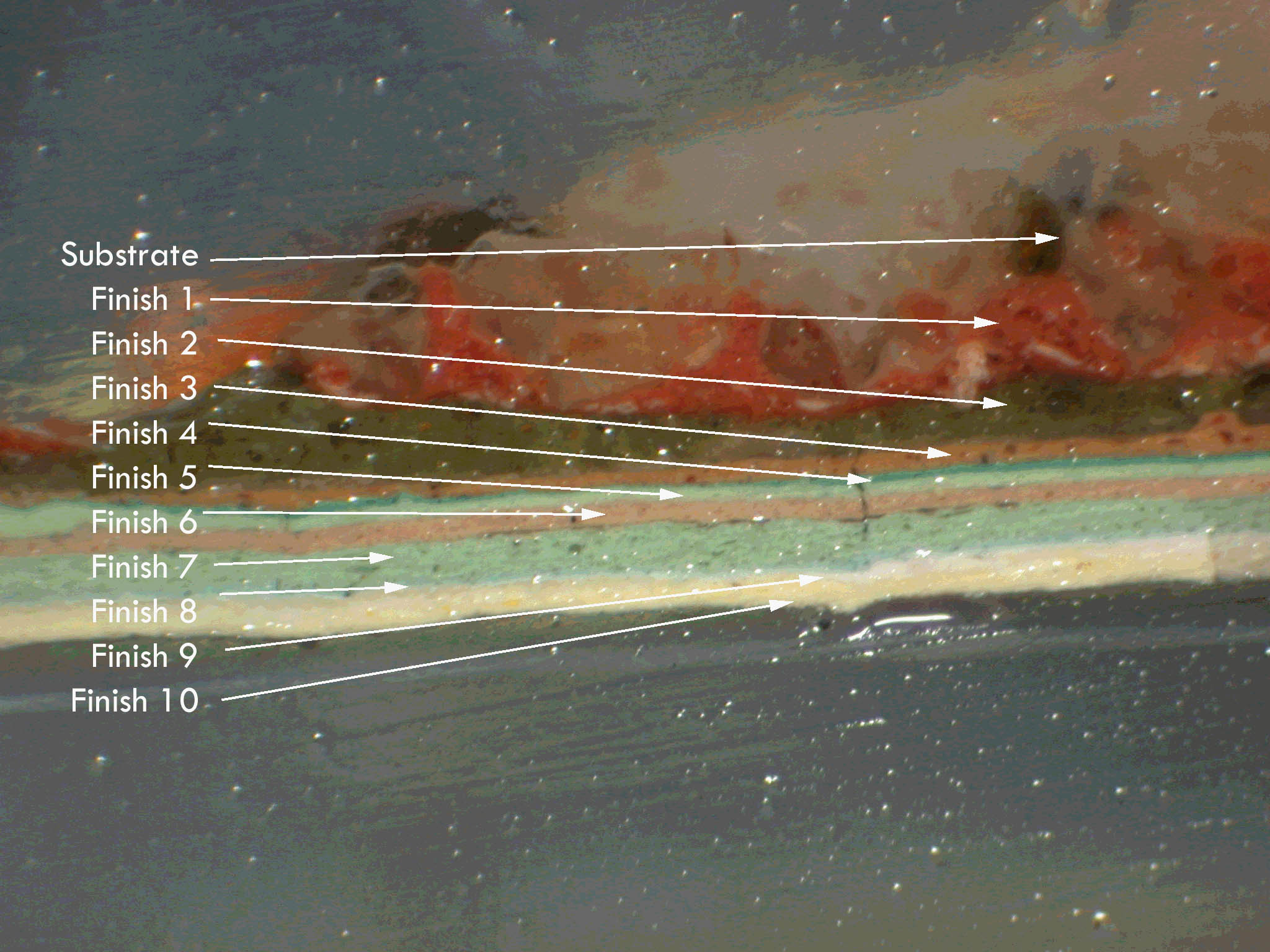
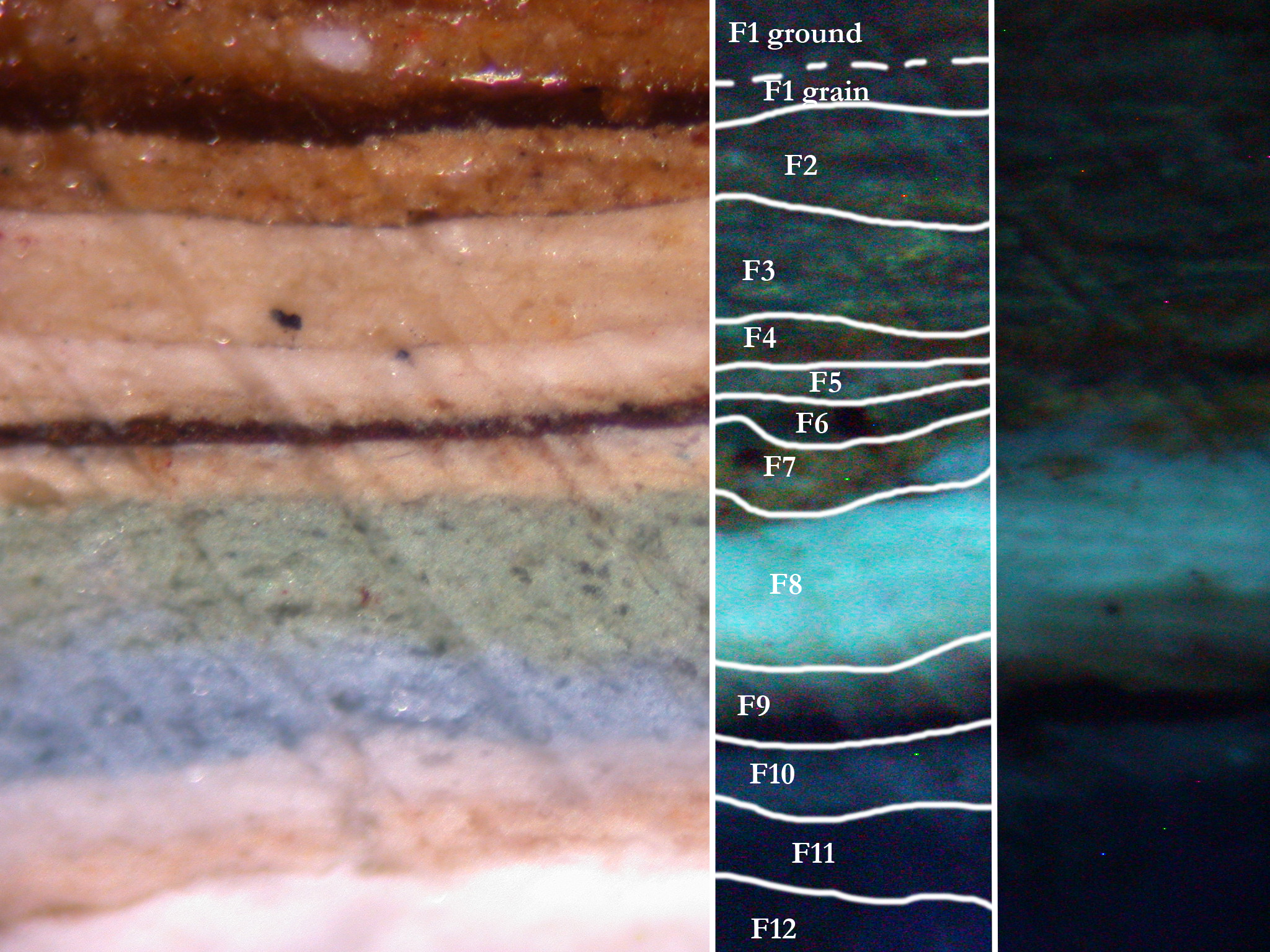
Polished cross-sections: Samples are embedded in
resin, cross-sectioned and polished before being
assessed microscopically. This analytical technique
allows us to clearly distinguish individual paint layers
and provides exceptionally clear photomicrographs.
Ultraviolet Fluorescence: To enhance distinctions
between layers and provide insight into
characterization
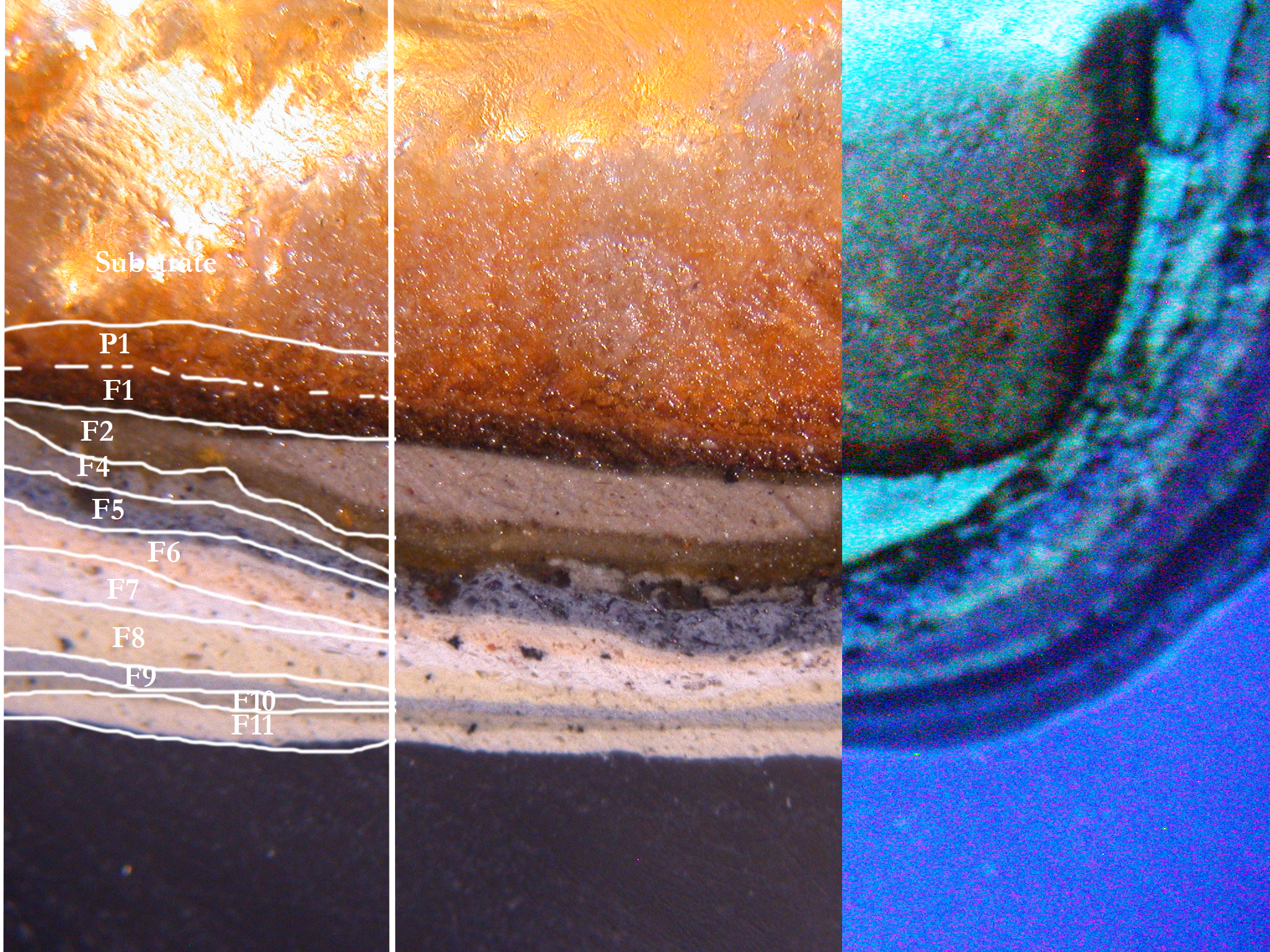
Basic stratigraphic analysis: Samples are
cross-sectioned manually with a scalpel and assessed
microscopically. Manual cross-sectioning provides for
a greater degree of sample manipulation and allows
us to evaluate the physical characteristics of individual
layers. This technique allows for larger portions of
each layer to be assessed, something which can be
advantageous for accurate color matching and also
for identifying decorative finishes such as graining,
stenciling or gilding.
Characterization of finish layers in Ultraviolet Light
(UV) and pigments with polarized light microscopy
(PLM). Microscopy is completed with a Leica DMLM
trinocular microscope which has been outfitted for
transmitted polarizing light and epi-fluorescence
and/or a Nikon SMZ-2T trinocular zoom microscope.
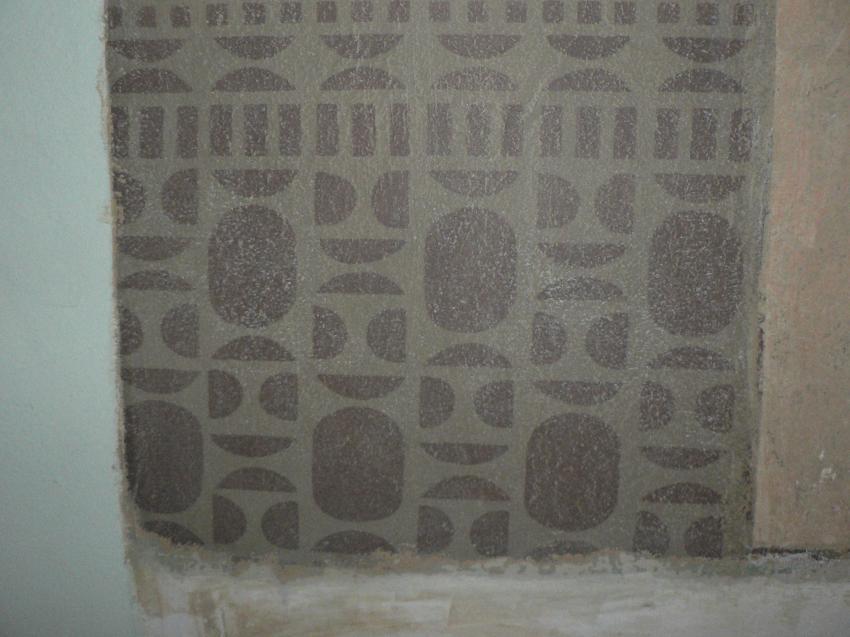
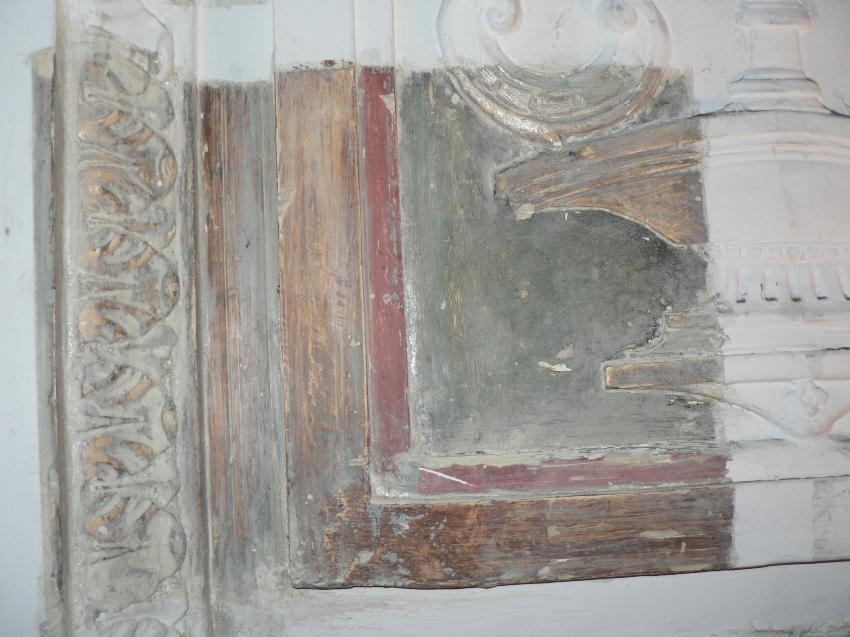
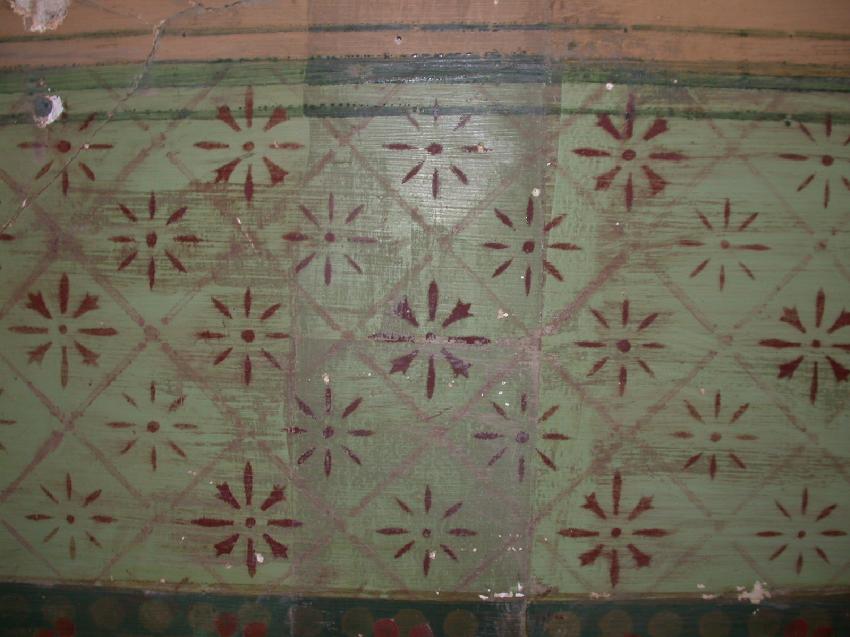
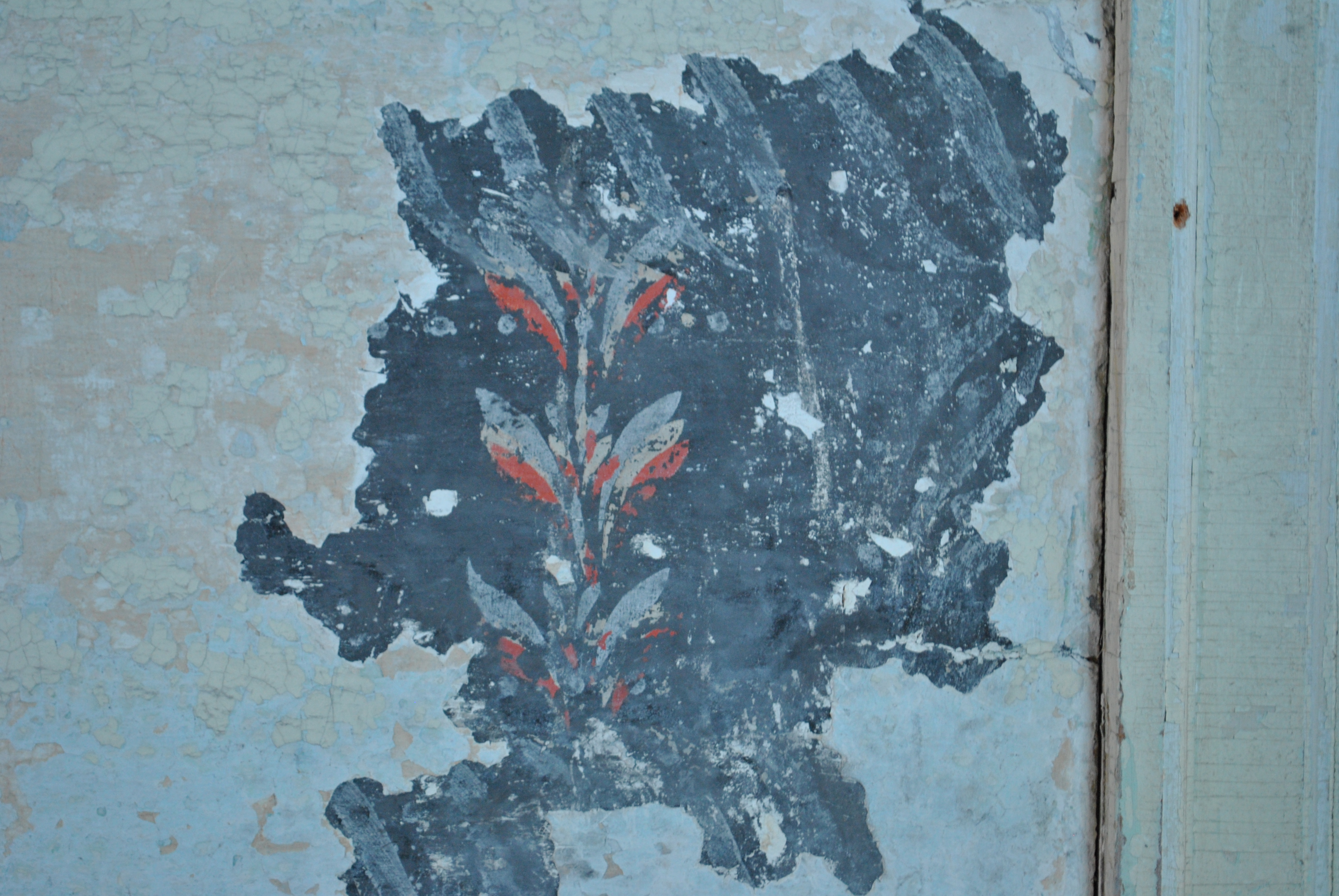
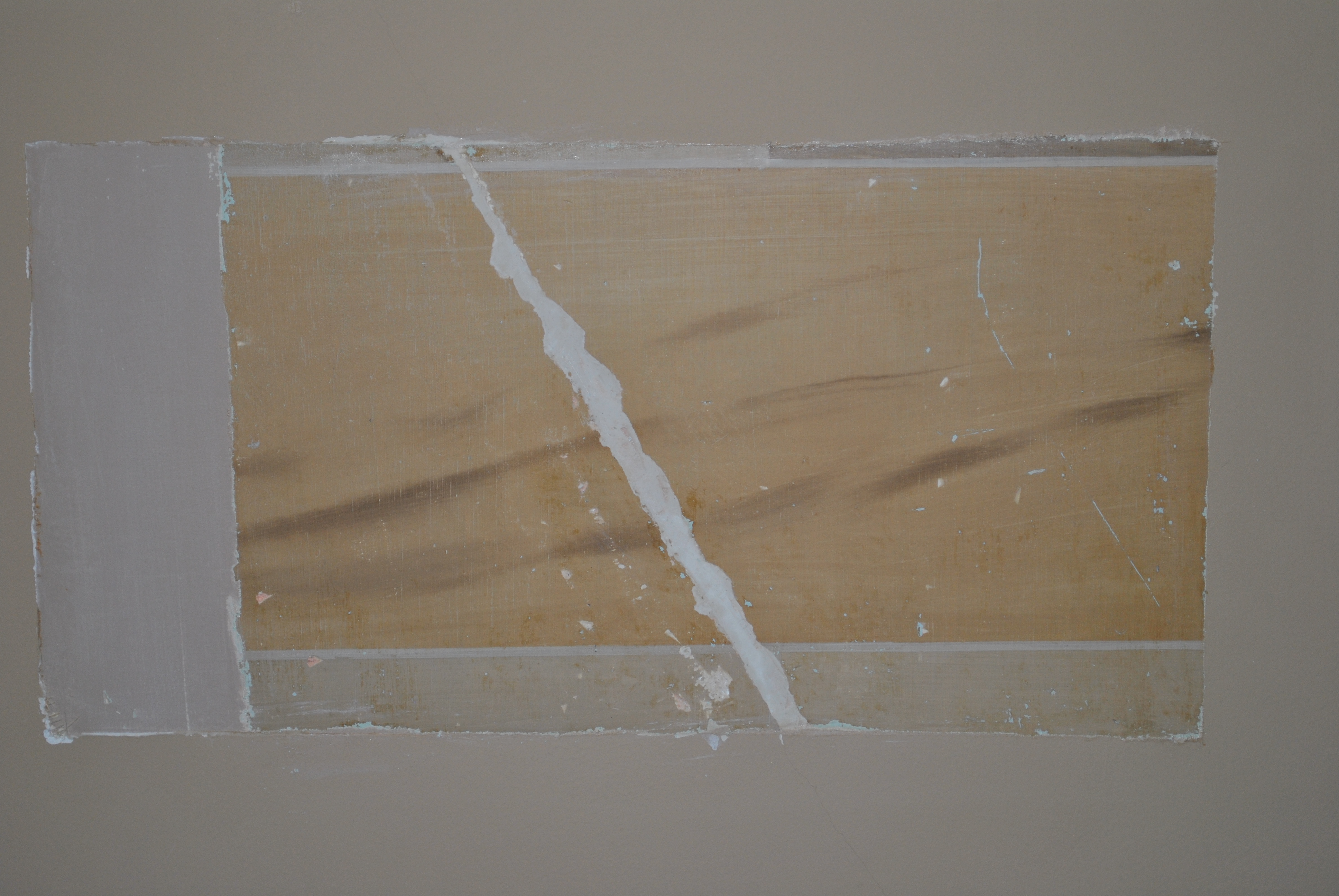
Exposure windows: Exposure windows are installed
on surfaces where significant decorative finishes are
considered likely and in instances where
cross-sectioning alone would not reveal such
evidence. With this technique, individual paint layers
are removed by mechanical and/or chemical means.
Color matching: Finish layers can be matched within
a standardized system of color such as Munsell, CIE
L*a*b, Pantone, etc. Color matching is performed
using a combination of techniques - either with a
portable colorimeter/spectrophotometer fitted with a
D65 Illuminant (for CIE L*a*b coordinates) or
compared visually with Munsell Color Standards in
color-corrected light. Analytical reports include
physical color chips for colors which are determined
to date either to original construction or to the period
of greatest historical significance.
Elemental Analysis: Working in collaboration with
materials analysts and other conservators, we assist
with elemental and chemical analysis of pigments and
binders.
Finishes and coatings are an essential component of
the architectural experience. Whether they be highly
decorative finishes such as stenciling, gilding or
wood-graining or simple opaque coatings,
architectural finishes help define the aesthetics of a
building's exterior or an interior space. More so than
perhaps any material, finishes are updated and
changed in response to maintenance needs, spatial
alterations or the desire for a new palette.
Keystone Preservation Group specializes in the
analysis of historic architectural finishes. Also known
as paint analysis, this service is most often provided
for clients who want to restore buildings or significant
spaces to a specific historic period. Paint analysis is
also exceptionally useful as a tool to provide
information on changes which have occurred over
time. The ability to discern difference in materials, a
knowledge of architectural history and color palettes
from different historical periods, and the ability to
interpret aesthetic intent are critical for any analyst.
Our finishes analyses typically incorporate one or
more of the following analytical techniques:
Polished cross-sections: Samples are embedded in
resin, cross-sectioned and polished before being
assessed microscopically. This analytical technique
allows us to clearly distinguish individual paint layers
and provides exceptionally clear photomicrographs.
Ultraviolet Fluorescence: To enhance distinctions
between layers and provide insight into
characterization
Basic stratigraphic analysis: Samples are
cross-sectioned manually with a scalpel and assessed
microscopically. Manual cross-sectioning provides for
a greater degree of sample manipulation and allows
us to evaluate the physical characteristics of individual
layers. This technique allows for larger portions of
each layer to be assessed, something which can be
advantageous for accurate color matching and also
for identifying decorative finishes such as graining,
stenciling or gilding.
Characterization of finish layers in Ultraviolet Light
(UV) and pigments with polarized light microscopy
(PLM). Microscopy is completed with a Leica DMLM
trinocular microscope which has been outfitted for
transmitted polarizing light and epi-fluorescence
and/or a Nikon SMZ-2T trinocular zoom microscope.
Exposure windows: Exposure windows are installed
on surfaces where significant decorative finishes are
considered likely and in instances where
cross-sectioning alone would not reveal such
evidence. With this technique, individual paint layers
are removed by mechanical and/or chemical means.
Color matching: Finish layers can be matched within
a standardized system of color such as Munsell, CIE
L*a*b, Pantone, etc. Color matching is performed
using a combination of techniques - either with a
portable colorimeter/spectrophotometer fitted with a
D65 Illuminant (for CIE L*a*b coordinates) or
compared visually with Munsell Color Standards in
color-corrected light. Analytical reports include
physical color chips for colors which are determined
to date either to original construction or to the period
of greatest historical significance.
Elemental Analysis: Working in collaboration with
materials analysts and other conservators, we assist
with elemental and chemical analysis of pigments and
binders.

Polished cross-section: Liberty Hall
Polished cross-section: Hoboken Lib.
Stratigraphy: St. Andrew's Church
Exposure: Vail Mansion
Exposure: Fifth Avenue Presbyterian
Exposure: Roseberry House
Exposure: Count Basie
Exposure: Talbot County Courthouse
Photomicrograph: Montville Museum


 |  |  |  |  |  |
Keystone Preservation Group
Historic Preservation, Architectural Conservation, Scope Consultation, RITC Consulting
Historic Preservation, Architectural Conservation, Scope Consultation, RITC Consulting
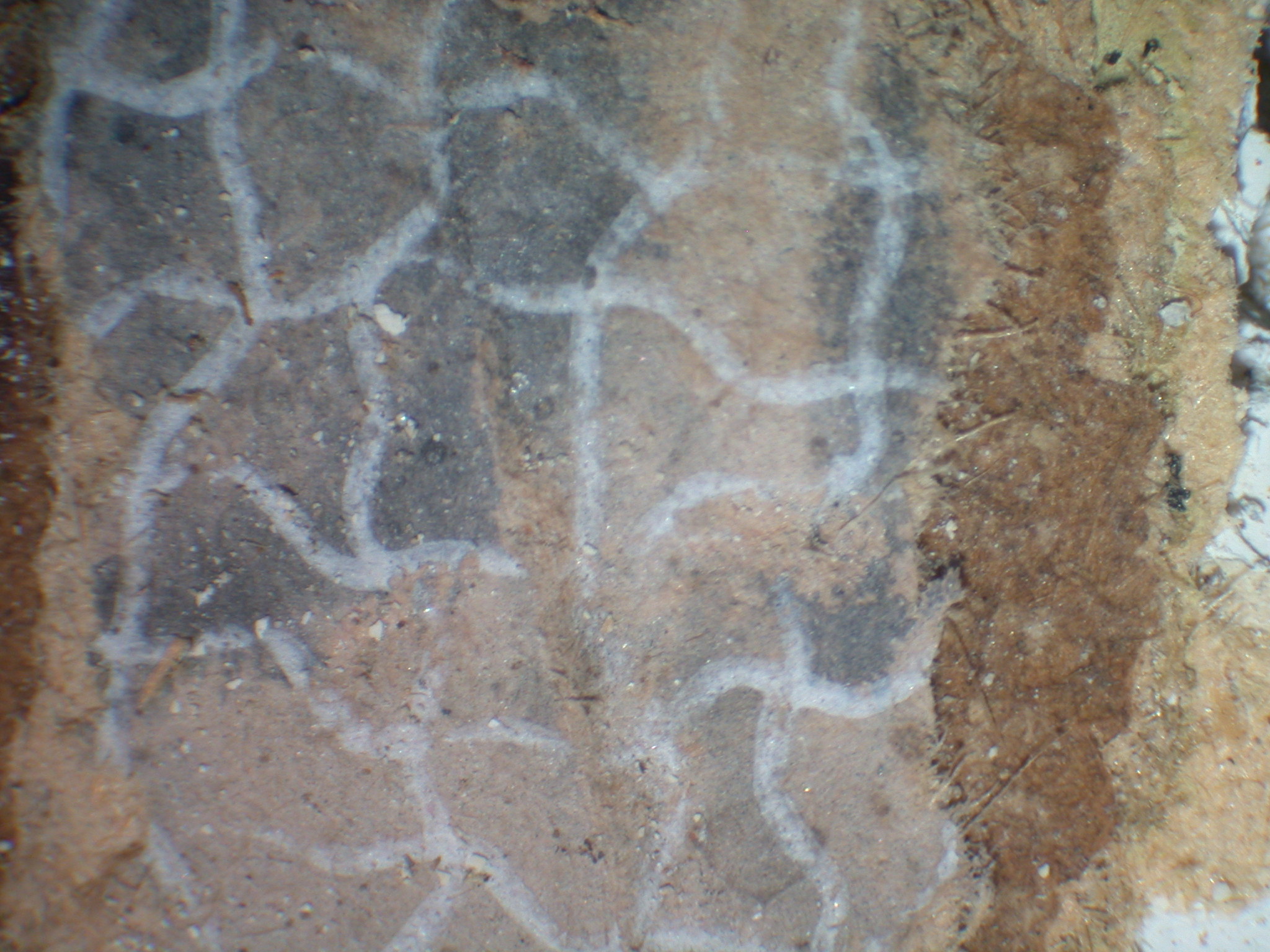
Wallpapers: Spangler Farm